
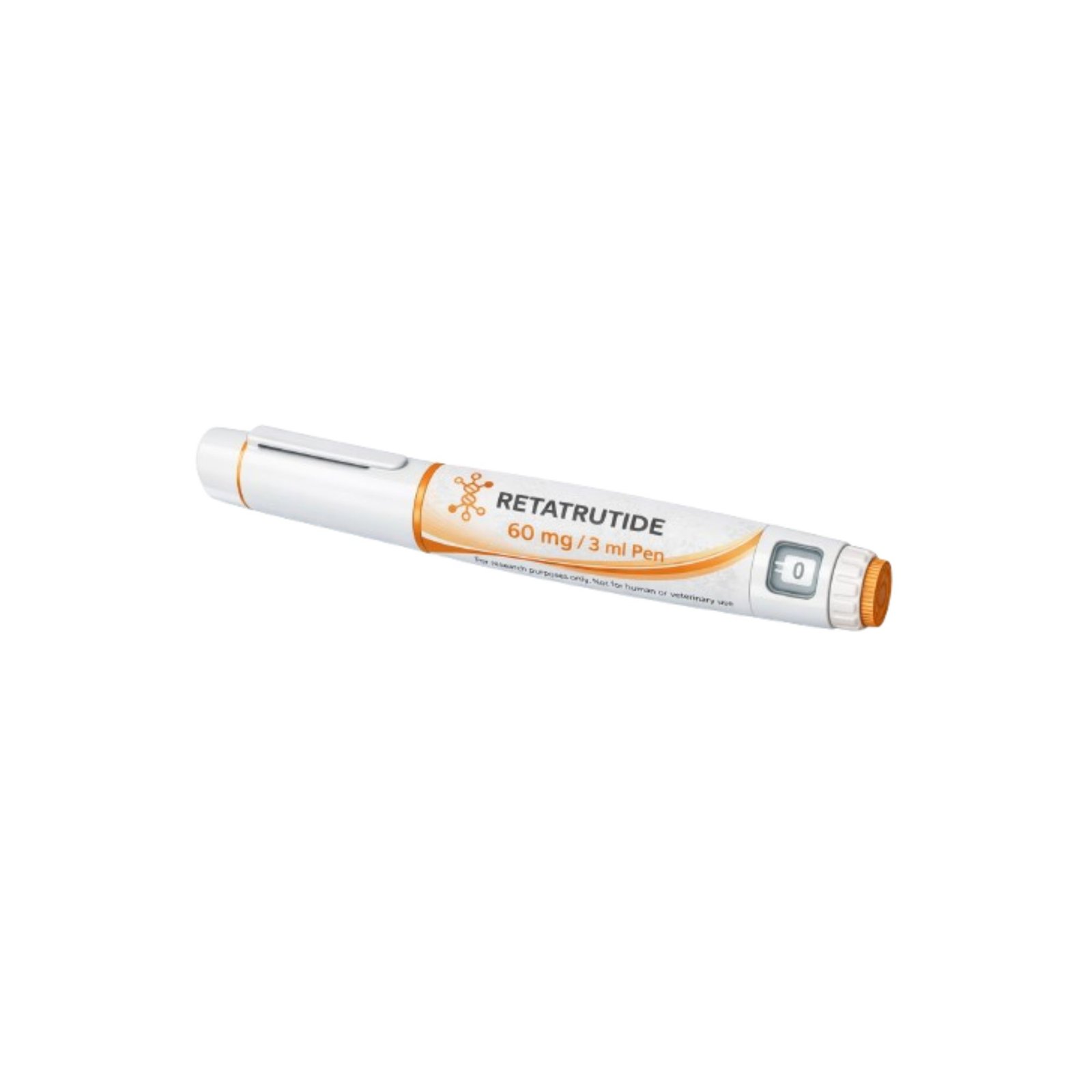
Retatrutide 60mg Pen is a triple receptor agonist developed by Eli Lilly and studied for its effects on metabolism, appetite signalling, and body weight regulation. Unlike earlier compounds that focus on a single pathway, Retatrutide targets GLP-1, GIP, and glucagon receptors together.
This multi-pathway approach has made it one of the most discussed compounds in current metabolic research, particularly in studies linked to weight management and blood glucose regulation. Researchers are especially interested in how these hormone pathways may work together to influence appetite, energy expenditure, and long-term metabolic response.
What Is Retatrutide?
Retatrutide is designed to activate three separate hormone receptors involved in metabolism and appetite control:
GLP-1 (Glucagon-Like Peptide-1): Linked to appetite regulation and slower gastric emptying.
GIP (Glucose Dependent Insulinotropic Polypeptide): Studied for its role in insulin signalling and nutrient metabolism.
Glucagon Receptor: Associated with energy expenditure and how the body uses stored energy.
By combining these pathways into one receptor agonist, researchers are exploring whether Retatrutide may produce broader metabolic effects compared to single-pathway compounds. This has led to comparisons with other similar weight loss injections, including Wegovy and Mounjaro.
Why Is Retatrutide Researched?
Interest in Retatrutide increased significantly following early clinical trial data exploring its effects on body weight and metabolic signalling.
In a 48-week Phase 2 clinical trial published in the New England Journal of Medicine, participants receiving the highest weekly dosing protocol of Retatrutide achieved average body weight reductions of up to 24.2%.
Researchers are particularly interested in how weekly dosing schedules and gradually increased exposure may influence appetite regulation, blood sugar response, and long-term metabolic adaptation.
Studies have also explored how activating receptors GLP-1, GIP, and glucagon together may affect:
Reduced appetite and food intake
Energy expenditure and metabolic activity
Blood glucose and blood sugar regulation
Weight management over extended observation periods
Ongoing clinical trials continue evaluating long-term outcomes, maintenance dose response, and how Retatrutide compares to earlier receptor agonist compounds. As with similar compounds, side effects are still being studied. Reported observations in clinical trials have included mild to moderate gastrointestinal effects in some participants.
Retatrutide Compared To Other Metabolic Compounds
Compound
Primary Targets
Research Focus
Semaglutide
GLP-1
Appetite regulation and blood sugar control
Tirzepatide
GLP-1 + GIP
Metabolism, appetite signalling, and weight management
Retatrutide
GLP-1 + GIP + Glucagon
Combined metabolic signalling, energy expenditure, and body weight regulation
Because Retatrutide includes glucagon receptor activity in addition to GLP-1 and GIP pathways, researchers are studying whether this added mechanism may influence energy balance differently compared to earlier compounds.
Use & Storage
The Retatrutide 60mg Pen should be stored under refrigerated conditions and protected from excessive heat or direct light exposure.
Standard handling practices include:
Keeping storage temperature stable
Avoiding unnecessary exposure to heat
Following consistent handling procedures
Responses can vary depending on observation period, weekly dosing structure, and maintenance dose approach used during studies.
Disclaimer: This product is sold strictly for research purposes only. Not for human consumption.
Related products
-
Medication
Cerebrolysin 60mg
Price range: $40.99 through $74.24 Select options This product has multiple variants. The options may be chosen on the product page


Reviews
There are no reviews yet.